
Understand Arya Dukkha and Eliminate It
Water drops vs Rain
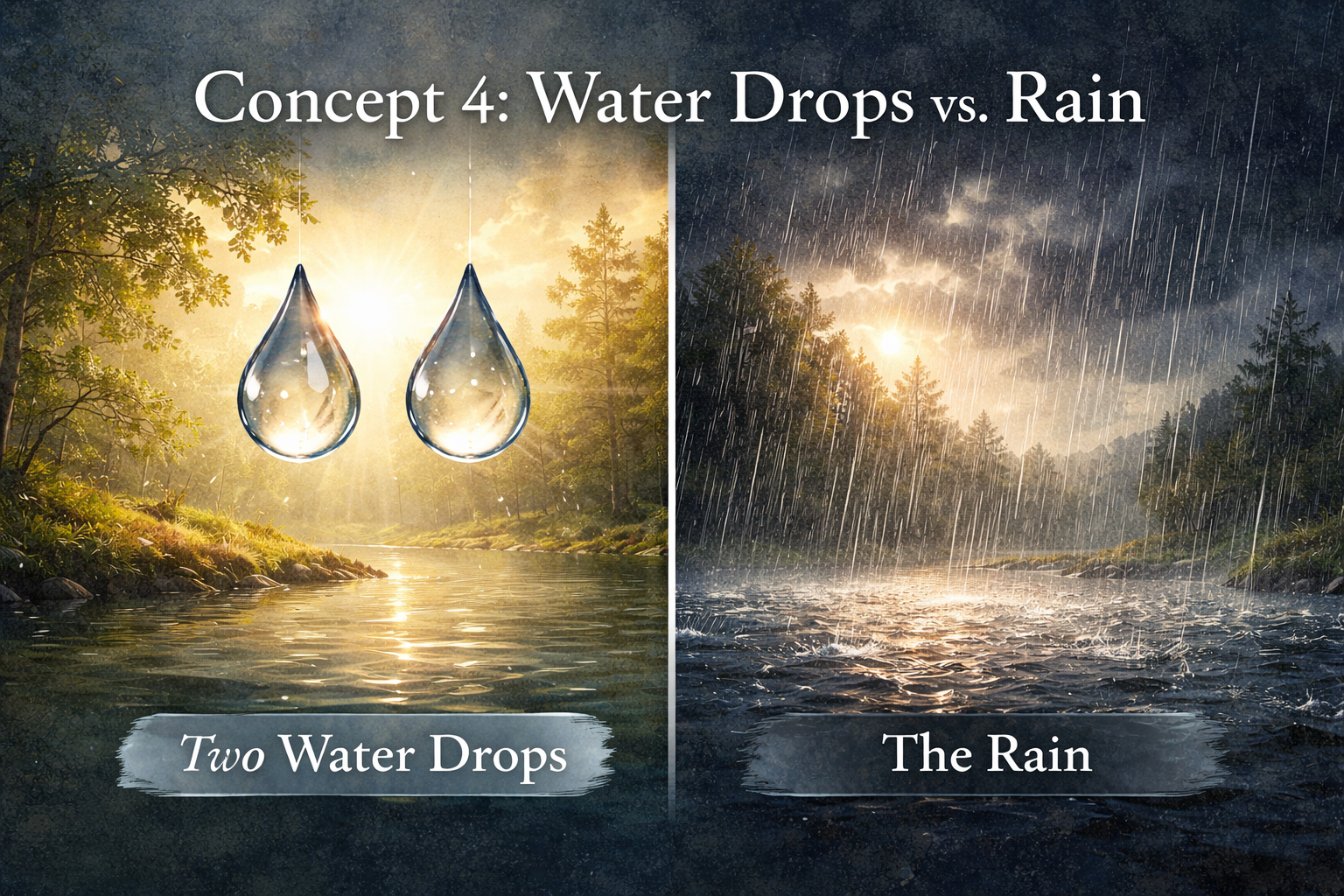
The practice is not merely to endure discomfort, but to clearly understand Arya Dukkha and eliminate it. To do that, one must first learn to separate two water drops from the rain.
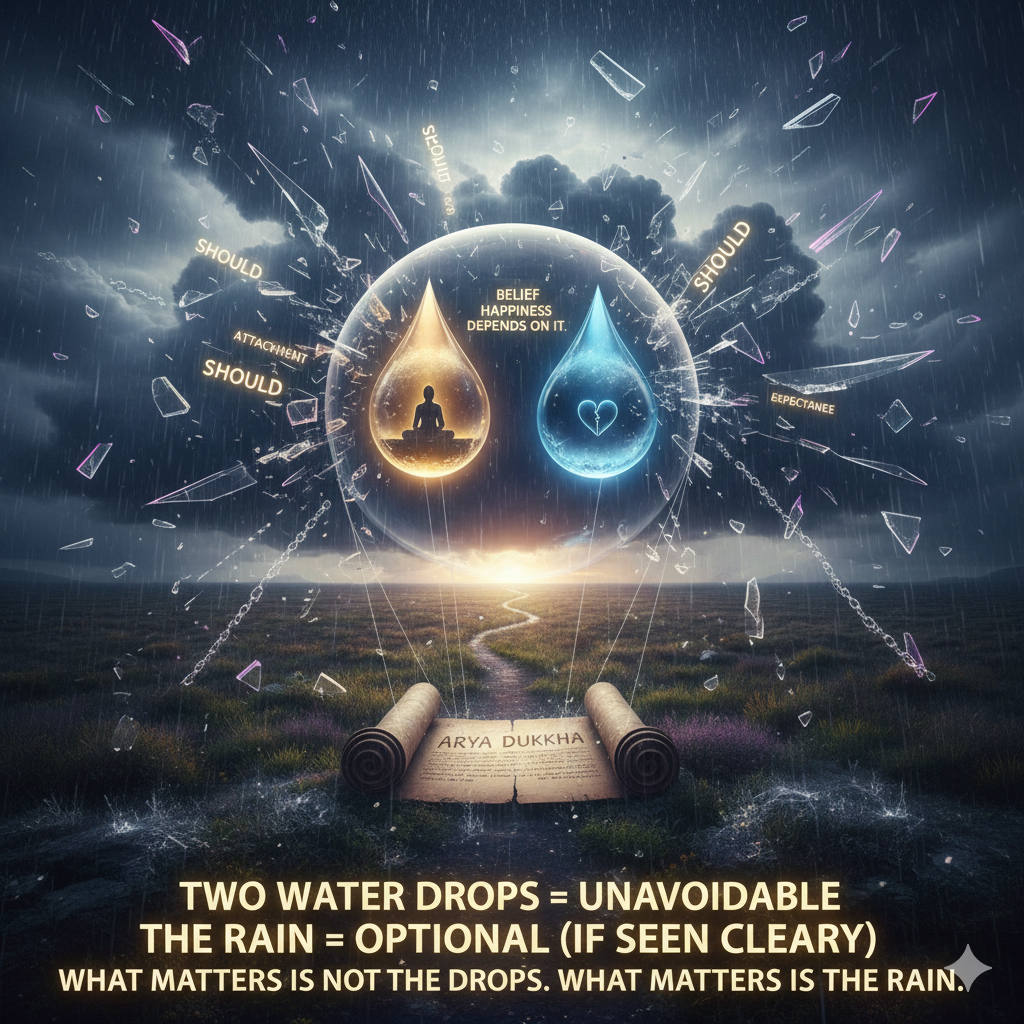
The two water drops are unavoidable.
The rain is optional—but only if it is seen clearly.
Arya Dukkha does not arise from events themselves. It arises from the belief that things should or should not happen in a certain way, and that happiness or relief depends on that belief being fulfilled.
What matters is not the water drops.
What matters is the rain.
Example 1: The Honking Vehicle
You are driving during rush hour.
You are already late.
A vehicle behind you keeps honking.
Someone in the passenger seat has their hand hanging outside the closed door.
- The honking sound belongs to two water drops.
- The traffic belongs to two water drops.
If you believe the honking should not have happened and anger arises, that is rain.
If you believe the honking should help you move faster and greed or agitation arises, that too is rain.
The sound is not the suffering.
The belief is.
Example 2: Serving Yourself Food
There is plenty of food.
The food is tasty.
Others are also eating.
You serve yourself many times.
- Serving food belongs to two water drops.
If you believe that serving more will bring satisfaction, pleasure, or security—and greed arises—that is rain.
If irritation arises because someone else served before you or took more—that is also rain.
Food satisfies hunger.
Belief promises happiness—and fails.
Example 3: The Dog Chewing a Meatless Bone
A dog chews a bone with no meat.
The dog keeps chewing.
Hunger does not go away.
- Chewing the bone belongs to two water drops.
If the dog believes:
- There should be meat, or
- Chewing should remove hunger,
and greed or anger arises—that is rain.
Here:
- The dog is the worldly being (ref: 1st episode, ~1:34:00)
- The bone is what the dog deserves from past deeds—good or bad
- The hunger not being filled is Arya Dukkha:
the belief that hunger can be eliminated by chewing the bone
The tragedy is not hunger.
The tragedy is believing the bone will end it.
Example 4: Losing Your Shoes
You lose your shoes while coming out of a temple.
The ground is burning hot.
You notice another pair—same size, same model, even better looking.
- Losing your belongings belongs to two water drops.
If you think harm should come to the thief, that is rain.
If you believe the shoes must be found because you like them so much, and anger or greed arises when they are not—that is rain.
The heat on the ground is not the suffering.
The expectation is.
Closing Reflection
Arya Dukkha is subtle.
It does not shout.
It quietly whispers: “This should have been different.”
When two water drops fall, they fall.
But when belief turns drops into rain, suffering floods the mind.
To see this clearly—to distinguish what happened from what we believe should have happened—is not a small insight.
It is the beginning of freedom.
Dukka Dukka
(from namaroopa.com page)
දුකත් දුක්ක දුක්කයත් යනු දෙආකාරයකි. මම සහ මගේ යන සම්මතය තුල ගොඩනගා ගත් පෙර හේතුවේ ඵලයක් වූ පංචස් කන්දය හේතුවෙන් වූ දුකත්, ඒ දුක්වූ පංචස්කන්ධය පිනවා ගත හැකියි යන මෝහයෙන් ගොඩනගා ගන්නා පංච උපාදනස්කන්ධ දුක වූ දුක්ක දුක්කයත් යන දුක් දෙආකාරයකින් දැකිය යුතුය. නිවන් අවබෝධයෙන් දුක්ක දුක්කය නිරෝධවේ. පරිනිර්වාණයෙන් පංචස්කන්ධ දුක නිරෝධ වේ. පංචස්කන්ධය තම අභිමතය පරිදි පිනවා ගැනීමට හැකි බවත්, එසේ පිනවීම තම කැමැත්ත (ඡන්දය) පරිදි පැවැත්විය හැකිය යන මුලාවත් (ඉච්ඡාව) හේතුවෙන් මේ දුක්ඛිත සසර ගමනට සත්වයා පත්වී ඇත. තම ඉච්ඡාව ඉටු නොවීම අනිච්ඡ නම් වේ. එසේ නොවීමෙන් සත්වයා දුකට පත්වේ (දුක්ක). එසේ දුකට පත් සත්වයාට මේ සසර ගමන තුල පිළිසරණක් නොවේ. අනාථ වේ (අනත්ත). මේ ලක්ෂණ තුන හඳුනා ගැනීම ම නිවීමකි. සම්මා දෘශ්ඨියට පත් වීමයි. මේ අනාථ සසර ගමනේ ආදීනව නොදැක අවිද්යාවෙන් අන්ධවීමේ අසාරත්වය දැකීමෙන් (අනුලෝමක්ශාන්තිය) සහ නිවනේ ශාන්තිය සැපය (සම්යක්තනියාමය) දැකීමෙන් සියලු දුක් නිරෝධය පත්වේ. රාගය සමඟ බැඳුණු මෝහය රාගය දුරු වීමේදී නිරෝධ වේ. ද්වේශය සමඟ බැඳුණු මෝහය ද්වේශය දුරු වීමේදී නිරෝධ වේ. මෝහය සමඟ බැඳුණු මෝහය ප්රඥාව වැඩීමේදී නිරෝධ වේ. රාග සහගත විඥානයට හේතුව රාග සහගත සංකාර යි. මෙසේ රාග විඥාන පසු පස හබා යන පුරුද්ද ඇති විට, ඒ පසු පස හඹා යෑමට පෙළඹේ. මෙහි ඇති භයානක බව මුලදී දැක්කා නම් (සම්මා දෘශ්ඨිය) එසේ හඹා යෑම ක්රමයෙන් අඩුවේ.
There are two kinds of suffering: dukkha and dukkha-dukkha. One is the suffering that arises due to the five aggregates (pañcakkhandha), which themselves are the result of past causes formed within the conventional notion of “I” and “mine.” The other is dukkha-dukkha, the suffering of clinging, which arises when—out of delusion—one attempts to gratify and maintain those suffering aggregates, believing they can be made pleasant and controlled. These two forms of suffering must be clearly understood.
Through the realization of Nibbāna, dukkha-dukkha ceases. With Parinibbāna, the suffering associated with the five aggregates ceases entirely. Beings remain trapped in this painful cycle of saṃsāra due to the delusion that the five aggregates can be satisfied at will, and that such satisfaction can be sustained according to one’s desire (chanda and icchā). When desire is not fulfilled, there is impermanence (anicca); from that, suffering (dukkha) arises; and because there is no true refuge in saṃsāra, beings are left helpless (anattā).
Recognizing these three characteristics is itself liberation—this is Right View (sammā-diṭṭhi). When one clearly sees the danger and futility of this refuge-less journey through saṃsāra, blinded by ignorance, and when one also sees the peace and happiness of Nibbāna, suffering comes to an end.
Delusion associated with greed ceases when greed is abandoned. Delusion associated with hatred ceases when hatred is abandoned. Delusion associated with delusion itself ceases with the development of wisdom. Consciousness rooted in greed arises from formations rooted in greed. When the habit of chasing after such greedy consciousness exists, one is repeatedly drawn to pursue it. But when the danger in this process is seen early—through Right View—that chasing gradually diminishes.
“There are two kinds of suffering: dukkha and dukkha-dukkha.”
Explanation:
In Buddhism, dukkha means suffering or unsatisfactoriness. Here, two layers are pointed out. One is the basic suffering that comes with having a body and mind. The other, dukkha-dukkha, is the extra suffering we create by struggling against that reality and trying to make life permanently pleasant.
“Suffering arises due to the five aggregates (pañcakkhandha) built on the idea of ‘I’ and ‘mine.’”
Explanation:
The five aggregates refer to body, feelings, perceptions, mental formations, and consciousness. We mistake these changing processes as a fixed “self.” That misunderstanding becomes the foundation for suffering.
“Believing the aggregates can be satisfied creates suffering of clinging.”
Explanation:
When we believe our body and mind can be controlled to always give pleasure, we cling to experiences. This clinging does not remove suffering; it deepens it.
“Through realization of Nibbāna, clinging-based suffering ceases.”
Explanation:
Nibbāna is not escape from life but freedom from confusion. When delusion ends, the suffering created by craving and clinging ends as well.
“Impermanence (anicca), suffering (dukkha), and non-ownership (anattā) define existence.”
Explanation:
Nothing lasts, nothing fully satisfies, and nothing can be owned as ‘me’ or ‘mine.’ Seeing this clearly is the beginning of liberation.
“Recognizing these three characteristics is Right View (sammā-diṭṭhi).”
Explanation:
Right View means seeing life as it truly is, not as we wish it to be. This understanding slowly weakens craving and fear.
“When the danger of chasing pleasure is seen, the chasing fades.”
Explanation:
Wisdom does not force desire away. It simply sees its cost so clearly that the mind naturally lets go.
Software Engineer & Data Science| SQL, Analytics, and AI Solutions
Nuwan Hettiarachchi
I bring strong experience in data analytics and data engineering, with a focus on SQL-driven data preparation, data quality, and scalable processing pipelines. My background includes working with large, complex datasets, supporting business intelligence, and applying data governance principles such as profiling, lineage, and documentation. I am known for collaborating effectively across teams to design clear, reliable data solutions that support informed decision-making.

My Story
From Curiosity to Craft: My Journey in Technology and Analytics
My name is Nuwan Hettiarachchi, and my journey has been guided by curiosity, service, and a strong belief in using technology to create meaningful impact.
I began my professional path working closely with data, systems, and people. Early on, I realized that I enjoyed solving practical problems—especially those where analytical thinking and real-world needs intersect. This led me into data analytics, automation, and software development, where I’ve spent years building tools that improve accuracy, efficiency, and decision-making.
A defining part of my journey has been 10 years of volunteer teaching at a charitable organization. Teaching reinforced my belief that knowledge is most powerful when shared. It strengthened my communication skills, patience, and ability to break down complex ideas—skills that continue to shape how I design systems and collaborate with teams today.
Professionally, I’ve worked across data analysis, reporting, and application development. One notable experience was developing a Human Resources appraisal system over two years using Visual Basic and SQL Server, where I translated business rules into reliable, user-friendly software. Projects like this deepened my appreciation for clean data, thoughtful design, and systems that support people—not just processes.
Over time, my work expanded into Python, SQL databases, analytics, and automation, with a growing focus on data integrity and insight-driven solutions. I enjoy building tools that reduce manual effort, surface meaningful patterns, and enable better decisions.
Outside of work, I value balance and mindfulness. I enjoy hiking, traveling, kayaking, and spending time in nature—activities that keep me grounded and curious.
Today, I’m focused on contributing within data science and analytics–driven environments, continuing to learn, mentor, and build solutions that are practical, ethical, and impactful.
Technologies I’ve Worked With


Phone
(604) 256-2432
Surrey BC, Canada