
Six Senses and Suffering
Why Liking Is Not the Problem
(0:55:00/ 3rd episode)
[7:51](https://www.youtube.com/watch?v=P8Hr5ovG83M&t=471s) දුක් දෙක යනු ස්පර්ශව, උරුමයට උපදින වේදනා යි. එනම් වතුර බිංදු දෙකක්. රාග ද්වේෂ මෝහ නම් මහ වැස්ස නොවේ.
[14:43](https://www.youtube.com/watch?v=P8Hr5ovG83M&t=883s) ගොන්නු දෙන්නා ආයතන. ආබාදව යෙදෙන්න පුලුවන්, අවිද්යාව නිසා. ඒ යම අනිච්ඡ යි. ඒ “යම” යනු මෙසේ වේවා ලැබිය හැකි/නොහැකි ලෙස ඇති “තමාට” වටින විදිහ යි.
[21:51](https://www.youtube.com/watch?v=P8Hr5ovG83M&t=1311s) කැමති සේ කියන්නේ කැමැත්ත ට ද?
[21:47](https://www.youtube.com/watch?v=P8Hr5ovG83M&t=1307s) ප්රශ්නය කැමැත්ත නොවේ.
[25:39](https://www.youtube.com/watch?v=P8Hr5ovG83M&t=1539s&pp=0gcJCTAAlc8ueATH) වාහන.
[30:00](https://www.youtube.com/watch?v=P8Hr5ovG83M&t=1800s) පණුවා සහ කොක්ක. [35:20](https://www.youtube.com/watch?v=P8Hr5ovG83M&t=2120s) කැමති ජාති
[41:00](https://www.youtube.com/watch?v=P8Hr5ovG83M&t=2460s&pp=0gcJCTAAlc8ueATH) හිතන විදිහ නොවේ ප්රශ්නය. නමුත් ඒ හිතන විදියත් එක්ක හදාගන්න ආබාධක්. පනුවා සහ කොක්කේ හැට් දැන ගන්න ඕන
[43:35](https://www.youtube.com/watch?v=P8Hr5ovG83M&t=2615s) ගිනි පෙට්ටිය… ගින්දර තිබ්බේ කොහේද?
[55:32](https://www.youtube.com/watch?v=P8Hr5ovG83M&t=3332s) ස.නි.4 බාලිසිකෝපම සූ.
[1:04:00](https://www.youtube.com/watch?v=P8Hr5ovG83M&t=3840s) කැමැත්ත සහ චන්ද රාගය.
[1:08:30](https://www.youtube.com/watch?v=P8Hr5ovG83M&t=4110s) කා ලෝකයේ සම්බන්ධයකට අනාගාමී වෙලා තිබ්බා නම් පමණක් කැමැත්ත තනියෙන් ලැබේ. පණුව පමණක් කොක්ක නැතුව.
[1:10:25](https://www.youtube.com/watch?v=P8Hr5ovG83M&t=4225s) උදා..තා. මැ. නැතිවෙන්න කැමැත්ත.
[1:13:21](https://www.youtube.com/watch?v=P8Hr5ovG83M&t=4401s) Twist..
Concept 12
Liking vs. Liking It the Way I Wish – Are They the Same?
(කැමති සේ කියන්නේ කැමැත්ත ට ද?)
Think carefully.
When something contacts one of the six senses—eye, ear, nose, tongue, body, or mind—there can be a pleasant feeling. I may say:
“I like it.”
But is that the same as saying:
“I can get it like this, the way I wish, the way I should get it”?
These are not the same.
The Momentary Nature of “I Like It”
When I say “I liked it,” what actually happened?
At that moment, under certain conditions, a pleasant experience arose. That is all.
If I truly “liked it” in a lasting sense, then why does that liking fade?
Why does the pleasure diminish?
Why does the object decay, change, or disappear?
Why does my interest shift?
If liking were stable, it would not fade when the object fades.
So clearly, “I like it” is temporary. It exists only for that instance.
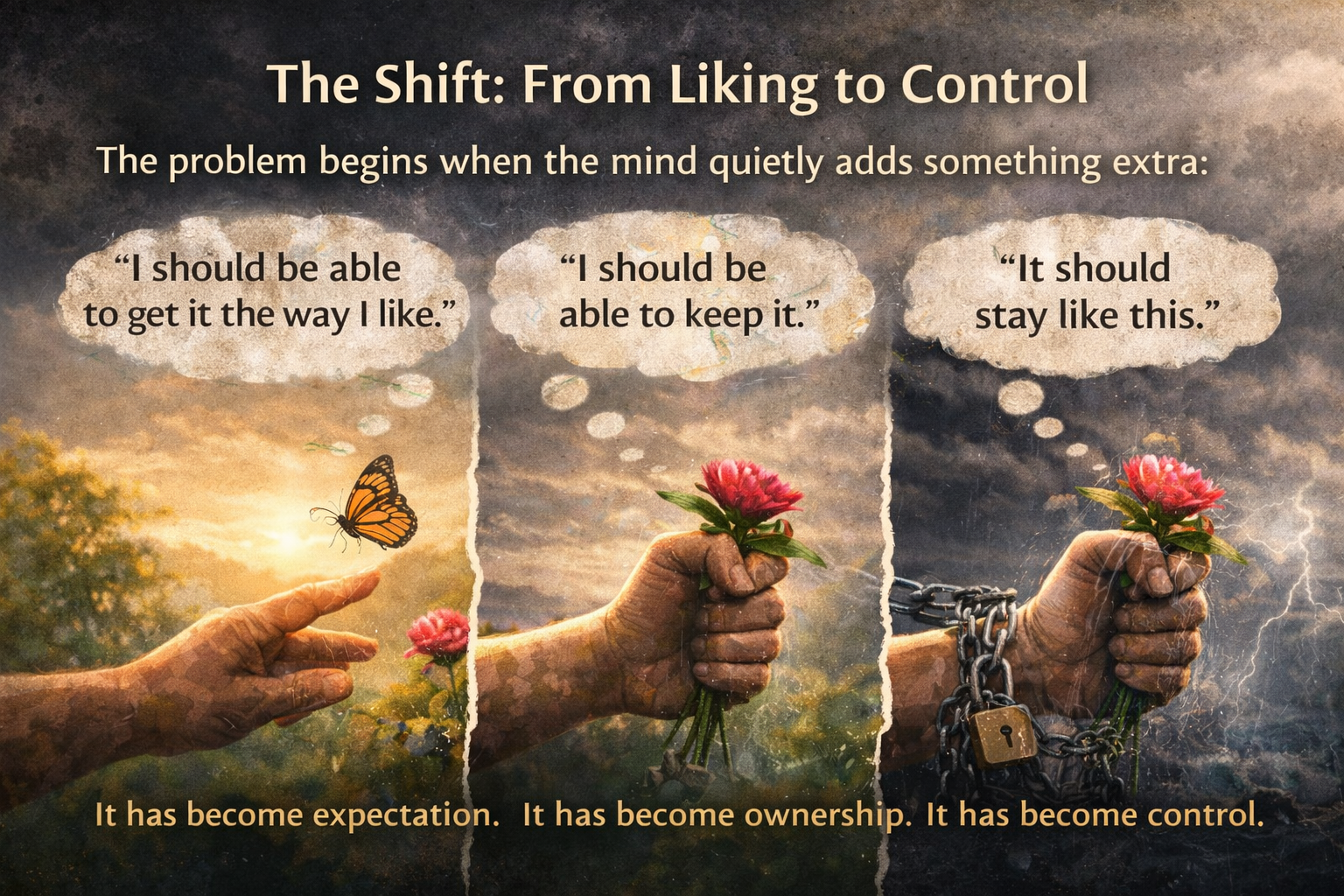
The Shift: From Liking to Control
The problem begins when the mind quietly adds something extra:
“I should be able to get it the way I like.”
“I should be able to keep it.”
“It should stay like this.”
Now it is no longer simple liking.
It has become expectation.
It has become ownership.
It has become control.
And this assumption is deeply subjective.
What I “like” today may bore me tomorrow.
What excites me now may become ordinary later.
To avoid boredom, I need more things to like.
Stronger things. Newer things. Better things.
And not just to like them —
but to have them exactly the way I wish.
The Endless Cycle of More
To keep the feeling alive, I search again and again.
More sights.
More sounds.
More tastes.
More experiences.
More validation.
And each time, I subtly believe:
“This time, I will get it the way I want.”
But conditions change.
Objects change.
The body changes.
The mind changes.
Nothing remains aligned with my expectation.
From Two Drops to Rain
This constant friction is not just ordinary discomfort.
It is not merely two drops of disappointment.
It becomes the rain —
the continuous suffering known as Arya Dukkha (Noble Dukkha).
Arya Dukkha is not about dramatic pain alone.
It is the suffering that arises when I assume:
“I can shape reality according to my liking.”
The suffering is not in the pleasant experience itself.
The suffering is in the demand:
“I must get it my way.”
So What Is the Difference?
- Liking → A temporary pleasant response through the six senses.
- Liking it my way → A belief that reality should obey my preference.
The first is natural.
The second creates bondage.
When we fail to see this distinction, life becomes an endless project of managing reality.
When we see it clearly, something softens.
Liking can arise.
Liking can pass.
Without turning into control.
And in that understanding, the rain begins to lighten.
I am especially drawn to the final paragraph of this sutta translation:
https://www.accesstoinsight.org/tipitaka/sn/sn35/sn35.189.than.html
“There are ideas cognizable via the intellect — agreeable, pleasing, charming, endearing, fostering desire, enticing. If a monk does not relish them, welcome them, or remain fastened to them, he is said to be a monk who has not swallowed Māra’s hook, who has snapped the hook, who has broken the hook, who has not fallen into misfortune & disaster. The Evil One cannot do with him as he will.”
This passage speaks directly to the shift we discussed.
Ideas arise in the mind just as sights arise in the eye and sounds arise in the ear. Some of them are agreeable, inspiring, even beautiful. The danger is not in their appearance. The danger begins when the mind relishes them, welcomes them, fastens onto them.
That fastening is the hook.
When the mind says,
“I should be able to keep this idea.”
“This understanding should stay.”
“This insight should remain exactly like this.”
That is already swallowing Māra’s hook.
But the one who does not cling — who does not convert liking into ownership — has snapped the hook. The object may still appear. Pleasant thoughts may still arise. But there is no fastening, no tightening, no demand that it obey “my way.”
When the sutta says, “who has snapped the hook, who has broken the hook, who has not fallen into misfortune and disaster,” it points to a mind that cannot be dragged by craving. A mind that is no longer controlled by the demand to shape experience according to preference.
I understand this as referring to the Arahant — one who has fully ended that subtle movement from liking to control. For such a person, pleasant and unpleasant still occur, but there is no hook to catch on. Māra has nothing to pull.
Software Engineer & Data Science| SQL, Analytics, and AI Solutions
Nuwan Hettiarachchi
I bring strong experience in data analytics and data engineering, with a focus on SQL-driven data preparation, data quality, and scalable processing pipelines. My background includes working with large, complex datasets, supporting business intelligence, and applying data governance principles such as profiling, lineage, and documentation. I am known for collaborating effectively across teams to design clear, reliable data solutions that support informed decision-making.

My Story
From Curiosity to Craft: My Journey in Technology and Analytics
My name is Nuwan Hettiarachchi, and my journey has been guided by curiosity, service, and a strong belief in using technology to create meaningful impact.
I began my professional path working closely with data, systems, and people. Early on, I realized that I enjoyed solving practical problems—especially those where analytical thinking and real-world needs intersect. This led me into data analytics, automation, and software development, where I’ve spent years building tools that improve accuracy, efficiency, and decision-making.
A defining part of my journey has been 10 years of volunteer teaching at a charitable organization. Teaching reinforced my belief that knowledge is most powerful when shared. It strengthened my communication skills, patience, and ability to break down complex ideas—skills that continue to shape how I design systems and collaborate with teams today.
Professionally, I’ve worked across data analysis, reporting, and application development. One notable experience was developing a Human Resources appraisal system over two years using Visual Basic and SQL Server, where I translated business rules into reliable, user-friendly software. Projects like this deepened my appreciation for clean data, thoughtful design, and systems that support people—not just processes.
Over time, my work expanded into Python, SQL databases, analytics, and automation, with a growing focus on data integrity and insight-driven solutions. I enjoy building tools that reduce manual effort, surface meaningful patterns, and enable better decisions.
Outside of work, I value balance and mindfulness. I enjoy hiking, traveling, kayaking, and spending time in nature—activities that keep me grounded and curious.
Today, I’m focused on contributing within data science and analytics–driven environments, continuing to learn, mentor, and build solutions that are practical, ethical, and impactful.
Technologies I’ve Worked With


Phone
(604) 256-2432
Surrey BC, Canada