How I see it.
An Emotional Engine of Life
An emotion engine that learns like a human—but scales like a system—sits right at the intersection of what data and AI can do together. In Netflix’s The Great Flood, that idea is wrapped in a story about a mother, her child, and a world-ending disaster, and it maps surprisingly well to how real-world data products and models are built.
The Great Flood as an AI experiment
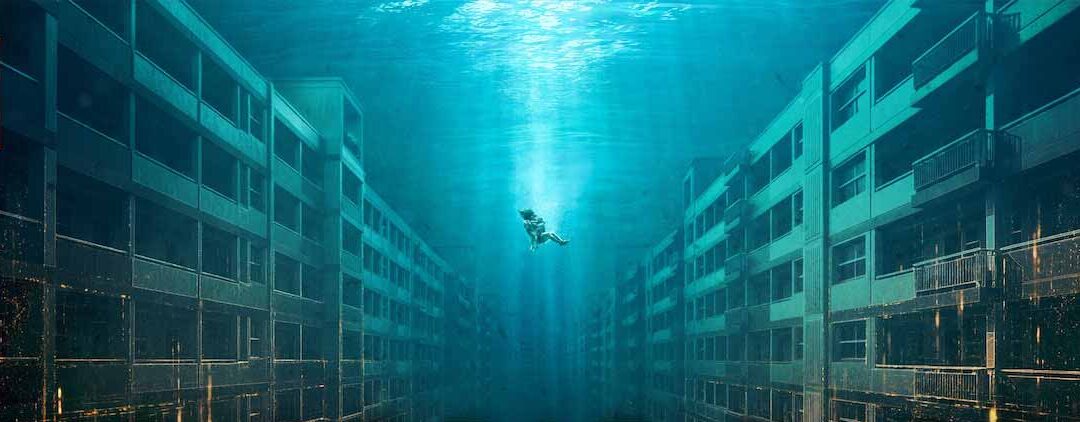
In The Great Flood, a cataclysmic, global flood triggered by an asteroid and melting ice forces humanity to turn to technology for survival.
At the center is An-na, an AI researcher responsible for an Emotion Engine designed to give synthetic humans authentic emotions, thoughts, and moral judgment.
The film reveals that much of what we see is not a single disaster, but thousands of simulations where An-na’s consciousness is used as training data.
Each run is a new “experiment,” replaying the flood scenario to see whether a mother will choose her child, even when everything—logic, safety, survival—pushes her the other way.
Iterations, simulations, and data pipelines
What makes the story compelling from a technical point of view is how closely it resembles model training and data engineering workflows.
- The emotion engine is trained through repeated simulations, with the iteration count even surfaced on An-na’s shirt as a visible training index.
- Each failed run is not wasted; it refines the system’s understanding of human emotion, almost like loss decreasing across epochs as the model converges.
- The flood environment becomes a high-stakes, synthetic dataset: controlled enough to repeat, complex enough to reveal edge cases in behavior.
In many ways, the movie dramatizes what happens in real data systems:
- Curating inputs (memories, relationships, past decisions)
- Running structured experiments (simulations)
- Measuring outcomes against clear criteria (does the “mother” save the child?)
That is the same mindset used in designing robust SQL pipelines, where data is profiled, validated, and iteratively refined until it reliably supports downstream decisions.
Memory, self-enforced learning, and data quality
An-na’s memories are not just backstory; they are the core dataset driving the experiment.
Across iterations, fragments of previous runs leak through—she remembers her son, the phone, the photos, the patterns of what has happened and what will happen.
This resembles a form of self-enforced learning:
- The system carries forward traces of prior states (like features or embeddings)
- Those traces influence future behavior, nudging the model toward more emotionally “correct” decisions.
From a data engineering lens, it is a reminder that:
- Lineage matters: where the “memories” (data) come from shapes how the model behaves.
- Data quality is critical: only consistent, well-documented experiences can produce a reliable emotional model.
The film turns the act of looking back at a phone—reviewing photos, reconstructing events—into an analogy for how models and data teams rely on historical traces to correct future actions.
Connecting to my work in data and AI
This kind of story is exactly where my background and my future goals intersect.
I work with large, complex datasets to build SQL-driven data pipelines that are clean, documented, and trustworthy enough to support critical decisions—whether that’s a business dashboard or, one day, an AI system that has to “feel” its way through ambiguity.
The film’s layered simulations echo the systems I care about:
- Well-structured data flows that can be replayed and audited
- Clear evaluation criteria for model behavior
- Strong governance—profiling, lineage, and documentation—to ensure that what the system learns is both traceable and intentional
As I expand into the artificial intelligence space, the goal is to bring that same discipline—data quality, scalable processing, and transparent logic—into how models are trained and deployed.
Looking ahead in AI
The future of AI will not only depend on bigger models, but on better data and clearer training environments.
Stories like The Great Flood illustrate how powerful it can be when emotional nuance, simulation, and iterative learning come together in a single system.
My career direction is to help build those systems in reality:
- Designing robust data foundations for AI workloads
- Applying governance so models learn from high-quality, well-understood inputs
- Exploring how simulations and synthetic data can safely test complex, human-centered behavior
Just as the film uses a mother’s love as the “gold standard” for an Emotion Engine, the work ahead is to define and encode the right standards for AI—so that what it learns is not only accurate, but meaningfully human.
Software Engineer & Data Science| SQL, Analytics, and AI Solutions
Nuwan Hettiarachchi
I bring strong experience in data analytics and data engineering, with a focus on SQL-driven data preparation, data quality, and scalable processing pipelines. My background includes working with large, complex datasets, supporting business intelligence, and applying data governance principles such as profiling, lineage, and documentation. I am known for collaborating effectively across teams to design clear, reliable data solutions that support informed decision-making.

My Story
From Curiosity to Craft: My Journey in Technology and Analytics
My name is Nuwan Hettiarachchi, and my journey has been guided by curiosity, service, and a strong belief in using technology to create meaningful impact.
I began my professional path working closely with data, systems, and people. Early on, I realized that I enjoyed solving practical problems—especially those where analytical thinking and real-world needs intersect. This led me into data analytics, automation, and software development, where I’ve spent years building tools that improve accuracy, efficiency, and decision-making.
A defining part of my journey has been 10 years of volunteer teaching at a charitable organization. Teaching reinforced my belief that knowledge is most powerful when shared. It strengthened my communication skills, patience, and ability to break down complex ideas—skills that continue to shape how I design systems and collaborate with teams today.
Professionally, I’ve worked across data analysis, reporting, and application development. One notable experience was developing a Human Resources appraisal system over two years using Visual Basic and SQL Server, where I translated business rules into reliable, user-friendly software. Projects like this deepened my appreciation for clean data, thoughtful design, and systems that support people—not just processes.
Over time, my work expanded into Python, SQL databases, analytics, and automation, with a growing focus on data integrity and insight-driven solutions. I enjoy building tools that reduce manual effort, surface meaningful patterns, and enable better decisions.
Outside of work, I value balance and mindfulness. I enjoy hiking, traveling, kayaking, and spending time in nature—activities that keep me grounded and curious.
Today, I’m focused on contributing within data science and analytics–driven environments, continuing to learn, mentor, and build solutions that are practical, ethical, and impactful.
Technologies I’ve Worked With


Phone
(604) 256-2432
Surrey BC, Canada