How I see it.
We are the sum of our history!
History has always been a lens for understanding the present, but for me it has become something more:
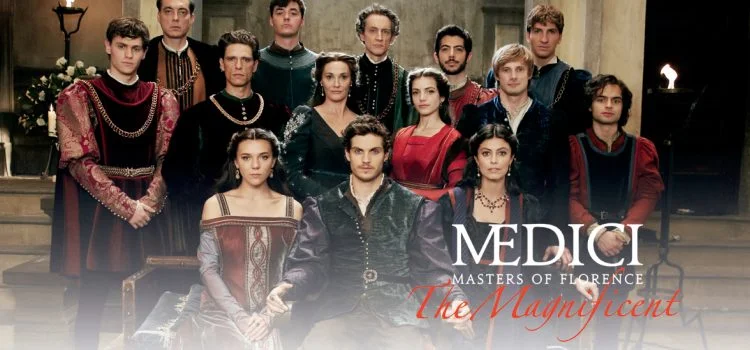
a blueprint for designing better systems. As someone who works in data analytics and data engineering, I see striking parallels between Renaissance Florence and modern data platforms, especially when watching Medici: Masters of Florence and Medici: The Magnificent.
Information, Finance, and Early Data Systems
From reading history to watching it unfold on screen, the three seasons of The Medici bring
to life an era defined by information, trade, and risk. The Medici bank stood at the center of European
finance, relying on ledgers, double-entry bookkeeping, and trusted records of debts, credits, and
currency values to support decisions for merchants, city-states, and even the Church.
Florentine florins and gold exchanges functioned like an early transactional system: if records were
inaccurate, the business collapsed; if they were trusted, power and influence followed.
[1]
[2]
From Ledgers to Data Pipelines
While that world feels distant, its logic is familiar. Today, instead of parchment ledgers, we rely on
SQL tables, data warehouses, and distributed processing pipelines. The Medici worried about forged
records, misinformation, and inconsistent accounts across branches; today we worry about data quality,
lineage, and governance across complex ecosystems.
In both eras, the core questions remain the same:
- Is this record accurate?
- Can we trace how it was created?
- Who is allowed to change it, and how do we detect manipulation or error?
My own work focuses on these problems in a modern context. I design SQL-driven data preparation
workflows that clean, validate, and standardize large datasets so they can be trusted for analytics
and business intelligence. I prioritize profiling to surface anomalies, documentation to ensure
transparency, and lineage to show how metrics are derived. In Renaissance Florence, a broken ledger
could collapse a bank; today, broken data can mislead organizations at scale.
Innovation Powered by Trusted Information
One of the most compelling aspects of the Medici story is how finance enabled innovation. Their
willingness to fund architects, artists, and scholars helped spark breakthroughs in art,
architecture, and early science. The pattern is clear: when information flows reliably and resources
are allocated intelligently, creativity flourishes.
In modern terms, this means building reliable and scalable data platforms that give teams confidence
to experiment, analyze, and iterate. Clean data pipelines are quiet infrastructure, but they are what
make meaningful innovation possible.
[3]
[1]
Narratives, Misinformation, and Governance
The series also highlights a timeless theme: the power of narrative. The Medici and their rivals
fought not only with money and armies, but with rumors, reputations, and carefully shaped stories
capable of influencing entire cities and the Church itself.
Today, similar dynamics exist in how data and AI are used. Dashboards, models, and metrics can clarify
reality—or distort it—depending on how rigorously they are built and interpreted. This is why data
governance, documentation, and collaboration matter so deeply in my work: they are modern safeguards
against confusion and misuse.
[4]
[3]
The Past as Prologue
Shakespeare wrote that “the past is prologue,” a phrase that resonates strongly with how I approach
both history and data. The systems we build today are part of a much longer story about how humans
record information, establish trust, and make decisions under uncertainty.
Learning how past societies solved their problems—often imperfectly, but creatively—shapes how I
design data solutions now: scalable, transparent, and grounded in real human needs.
In a world increasingly driven by data and AI, understanding history is not an academic exercise;
it is a way to develop better judgment. The Medici used the best tools of their time—ledgers, letters,
and contracts—to navigate power and risk. I use the best tools of mine—SQL, data pipelines, and
governance frameworks—to turn raw information into reliable insight. As Franklin D. Roosevelt
observed, learning from the past is how we gain the judgment to shape the future.
Software Engineer & Data Science| SQL, Analytics, and AI Solutions
Nuwan Hettiarachchi
I bring strong experience in data analytics and data engineering, with a focus on SQL-driven data preparation, data quality, and scalable processing pipelines. My background includes working with large, complex datasets, supporting business intelligence, and applying data governance principles such as profiling, lineage, and documentation. I am known for collaborating effectively across teams to design clear, reliable data solutions that support informed decision-making.

My Story
From Curiosity to Craft: My Journey in Technology and Analytics
My name is Nuwan Hettiarachchi, and my journey has been guided by curiosity, service, and a strong belief in using technology to create meaningful impact.
I began my professional path working closely with data, systems, and people. Early on, I realized that I enjoyed solving practical problems—especially those where analytical thinking and real-world needs intersect. This led me into data analytics, automation, and software development, where I’ve spent years building tools that improve accuracy, efficiency, and decision-making.
A defining part of my journey has been 10 years of volunteer teaching at a charitable organization. Teaching reinforced my belief that knowledge is most powerful when shared. It strengthened my communication skills, patience, and ability to break down complex ideas—skills that continue to shape how I design systems and collaborate with teams today.
Professionally, I’ve worked across data analysis, reporting, and application development. One notable experience was developing a Human Resources appraisal system over two years using Visual Basic and SQL Server, where I translated business rules into reliable, user-friendly software. Projects like this deepened my appreciation for clean data, thoughtful design, and systems that support people—not just processes.
Over time, my work expanded into Python, SQL databases, analytics, and automation, with a growing focus on data integrity and insight-driven solutions. I enjoy building tools that reduce manual effort, surface meaningful patterns, and enable better decisions.
Outside of work, I value balance and mindfulness. I enjoy hiking, traveling, kayaking, and spending time in nature—activities that keep me grounded and curious.
Today, I’m focused on contributing within data science and analytics–driven environments, continuing to learn, mentor, and build solutions that are practical, ethical, and impactful.
Technologies I’ve Worked With


Phone
(604) 256-2432
Surrey BC, Canada